

Warehouse transformation is often treated as a milestone. In reality, it is an ongoing discipline. That perspective is not only relevant today, it is more critical than ever. The current supply chain landscape is defined by volatility, compressed delivery expectations, and increasing operational complexity. E-commerce growth, omnichannel fulfillment, and rising labor constraints have fundamentally changed how warehouses need to operate. What worked even a few years ago is no longer sufficient.
Many organizations still approach Warehouse Management Systems as finite projects. They invest heavily, execute implementation, and measure success at go-live. But warehouses are not static environments. Volumes fluctuate, SKU profiles evolve, automation footprints expand, and customer expectations continue to rise. A system that is not continuously refined will quickly fall out of sync with the business.
Across industries, a consistent pattern emerges. The challenges are rarely about the platform itself. They stem from execution gaps. Organizations struggle with unclear requirements, compressed timelines, and teams learning systems while implementing them. Insufficient readiness and training introduce risk well before go-live.
Testing is another critical pressure point. Manual processes and incomplete scenarios often lead to defects surfacing late in the cycle, increasing both cost and operational risk. Even when go-live is achieved, many teams enter production environments without full confidence in system behavior under real-world conditions. This is where the role of warehouse consulting must evolve.
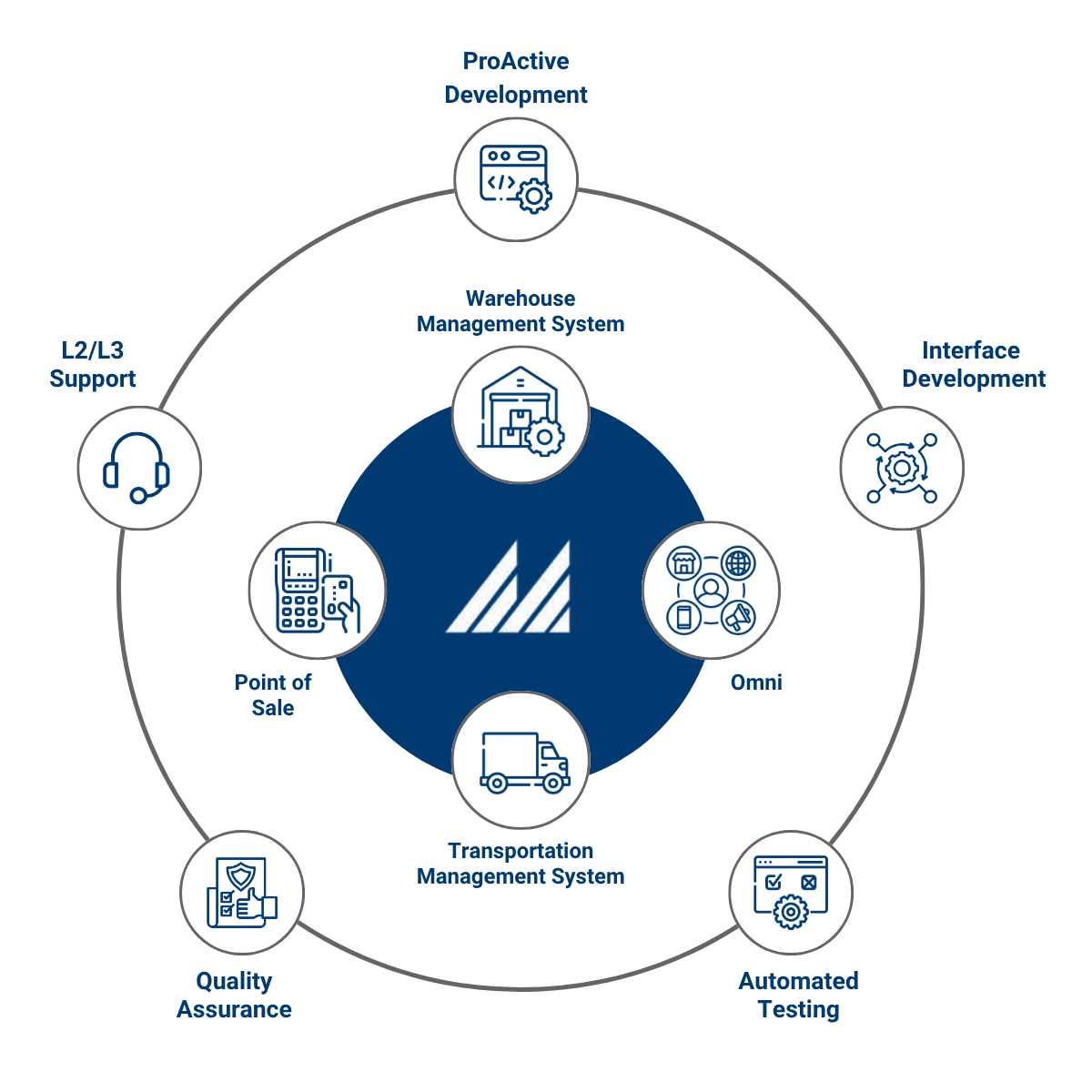
The conversation is no longer about configuring a WMS. It is about designing and sustaining a high-performing ecosystem. Modern warehouses depend on seamless connectivity between WMS, ERP, automation systems, and shipping platforms. Real-time, event-driven integrations are now foundational to visibility and execution speed.
Quality assurance has also shifted from a phase to a capability. In environments where platforms continuously evolve, automated testing and structured validation are essential to maintaining stability. Without this discipline, every change introduces risk. The most significant opportunity, however, lies beyond go-live.
Organizations that treat go-live as the finish line often experience gradual performance decline. Bottlenecks reappear, labor inefficiencies increase, and system capabilities remain underutilized, driving up cost per order, impacting service levels, and limiting the ability to scale during peak demand.
This continuous improvement mindset is what drives sustained performance. It enables faster throughput, better labor productivity, and more consistent service levels. In practice, it means optimizing inbound and outbound flows, refining picking and replenishment strategies, reducing unnecessary touches, and continuously enhancing system logic and integrations as automation expands.
Technology is accelerating this shift. Cloud-native platforms bring flexibility and scalability, but they also require stronger operational discipline. Frequent updates, growing integration complexity, and the emergence of AI-driven capabilities mean organizations must invest in automated testing, custom development, structured validation, and ongoing optimization to maintain stability and performance. Manhattan Associates, for example, has introduced Agentic AI capabilities within Manhattan Active solutions, designed to support intelligent agents that can perform tasks, adapt to changing operational conditions, and dynamically orchestrate workflows. Similar innovation is happening across the broader supply chain software landscape. These capabilities create significant opportunity, but they also reinforce an important reality: technology does not remain static after go-live. It must be continuously tuned, governed, tested, and aligned with the way the business actually operates.
AI will increasingly become part of the modern warehouse operating model, not as a replacement for strong execution discipline, but as an accelerator for continuous improvement. As WMS, labor, transportation, automation, and orchestration platforms become more intelligent, organizations will need partners who can translate these capabilities into practical operational value. That includes identifying the right use cases, validating AI-driven recommendations, integrating agents into existing workflows, monitoring outcomes, managing exceptions, and ensuring that automation improves throughput without introducing new operational risk. The value is not simply in having AI available inside the software. The value is in applying it responsibly, operationally, and continuously as business needs change.
What ultimately differentiates high-performing organizations is mindset. They move from viewing warehouse transformation as a project to treating it as an ongoing capability. This shift requires a partner who understands not just the technology, but the operational context in which it operates.
This is where VCO’s approach becomes particularly relevant. As a Manhattan-focused partner with deep implementation, integration, automation, and support experience, the emphasis goes beyond deploying systems to engineering connected, high-performing warehouse ecosystems across the full lifecycle. From readiness assessments and structured implementation to automated testing, real-time integrations, AI-enabled optimization, and continuous improvement, the focus remains on building systems that evolve with the business. As platforms introduce more intelligent and agentic capabilities, VCO’s role as a long-term partner becomes even more important: helping organizations validate changes, operationalize new features, adapt workflows, support production environments, and ensure technology continues to deliver measurable business value. With global support coverage and a strong focus on enablement, the goal is to ensure warehouse operations do not just stabilize but continuously improve.
The takeaway is straightforward. A warehouse is not something you implement once. It is something you continuously refine and scale. The real question for leaders today is not whether their system went live successfully. It is whether their operations are improving fast enough to keep pace with the business.
For organizations looking to move beyond stabilization and unlock measurable performance gains, the focus must shift to continuous optimization, integration maturity, and operational discipline. That is where the right partner makes the difference.
If you are rethinking your warehouse strategy or looking to unlock more value from your existing systems, now is the time to act. Partner with experts who can help you move beyond go-live and build a warehouse operation that evolves as fast as your business, your technology, and your customers’ expectations.