

Operational Integration & Intelligence Hub
Connect enterprise systems, coordinate business processes, and turn operational events into governed action across your supply chain.
From Fragmented Systems to Operational Context
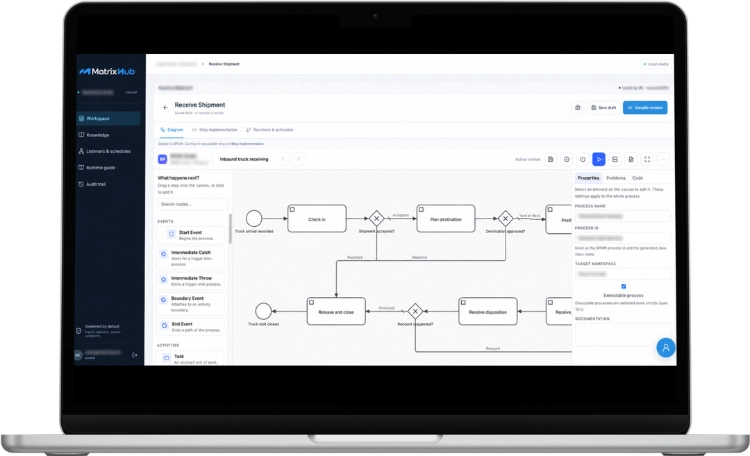
MatrixHub connects systems such as WMS, ERP, TMS, and CRM through APIs, events, EDI, files, and other integration methods, bringing operational information into a common context.
It combines business process orchestration with integration workflows to coordinate decisions, people, applications, and AI across existing systems of record.
The resulting context supports operational visibility, exception handling, governed decisions, and coordinated execution.
What MatrixHub Does

Integration Services
Connect enterprise applications through APIs, events, EDI, MCP servers, and system observers.

Workflow Orchestration
Configure workflows through portal-based visual tools and natural-language prompts, coordinating BPMN processes and cross-system actions.

Operational Intelligence
Correlate operational information to surface relevant context, insights, and possible causes.

AI-Based Data Analysis
Turn data into insights and help explain potential business impact.

Operational Views
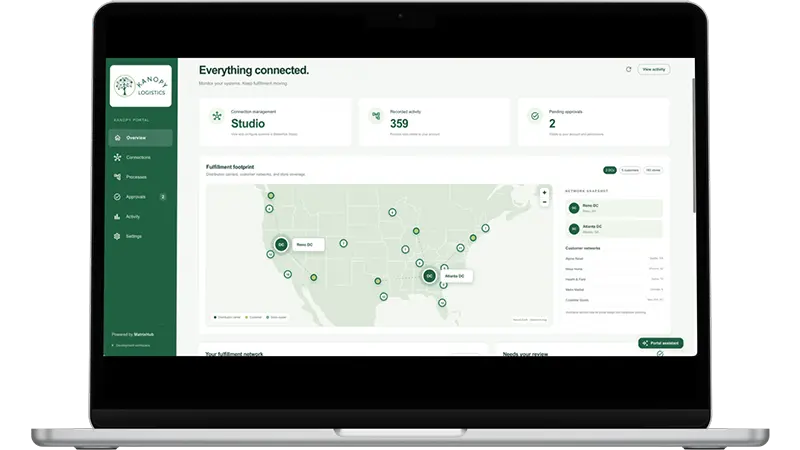
Provide real-time visibility across the enterprise through configurable, role-based views.

AI Enablement
Give employees and AI agents governed access to enterprise knowledge and operational context.
Turning Operational Events Into Action
Capture
Detect operational events, exceptions, and changes across connected systems.
Correlate
Connect related data, orders, schedules, and business context.
Understand
Assess the situation and surface possible causes and response options.
Alert
Notify the right people and route proposed responses through required approvals.
Act
Coordinate approved actions across connected systems and track completion.
Example Workflow: Resolving a Shipment Delay
When a shipment is delayed, MatrixHub identifies affected orders and warehouse schedules, alerts the operations team, routes a proposed response for approval, coordinates updates across connected systems, and tracks completion.
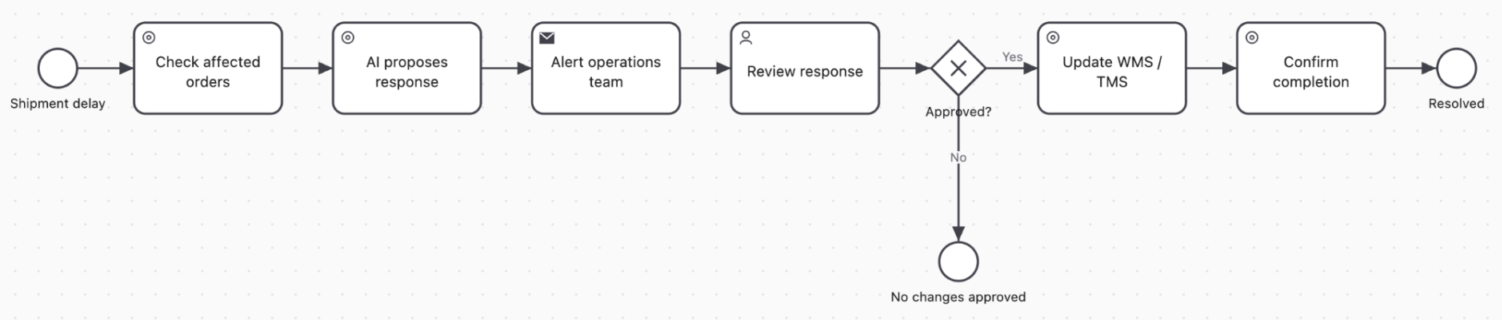
Illustrative example. MatrixHub coordinates the process across existing systems of record, with human approval where required and an audit trail of actions and outcomes. If the response is not approved, it can be returned for review rather than proceeding to system updates.
AI With Context and Control
MatrixHub brings AI into business processes with defined controls, governed access, and visibility into how actions are proposed and executed.
- Guiderails: Keep workflows aligned with defined processes and business rules.
- Guardrails: Apply permissions, validation rules, and approval gates, with human oversight where required.
- Audit history: Maintain visibility into actions and execution outcomes.
- Governed access: Give employees and AI agents controlled access to enterprise knowledge and operational context.
- AI usage visibility: Track token consumption across workflows.
The Right Context for Each Role
MatrixHub provides role-based operational views with the information and insights relevant to each user.

Customer Service
Order status, delays, explanations, and relevant operational information.

Operations
Exceptions, dependencies, bottlenecks, and corrective actions.

Executives
Trends, risks, performance summaries, and organizational questions.

IT Teams
Integration health, event flows, failures, and system dependencies.

AI Agents
Governed access to enterprise knowledge and operational context.
Connect the Systems Behind Your Operations
MatrixHub connects the applications and technologies that support business and operational processes.
WMS, ERP, TMS and CRM
Databases and legacy systems
APIs and microservices
Events and messaging
EDI and files
Documents and reports
Automation
AI and agent interfaces
MatrixHub and MatrixAssure
Two separate products that can be deployed independently or combined.
Connects systems, events, workflows, and enterprise knowledge to create operational context and enable intelligent action.

Connects business requirements, executable testing, quality validation, and release readiness.
Connect Your Operations
Connect your systems, operational events, workflows, and enterprise knowledge with MatrixHub.
Frequently Asked Questions
What is MatrixHub and what does an operational intelligence platform do?
MatrixHub is an operational integration and intelligence platform that connects enterprise systems, operational events, workflows, and enterprise knowledge. It brings information into a common context so teams can understand exceptions, coordinate decisions, and manage actions across connected operations.
Can MatrixHub integrate ERP, WMS, TMS, and CRM systems?
Yes. MatrixHub connects systems such as ERP, warehouse management systems (WMS), transportation management systems (TMS), and customer relationship management (CRM) platforms, along with databases and other enterprise applications. Integration methods include APIs, events, EDI, files, and other supported connections.
How can MatrixHub improve supply chain visibility and exception management?
MatrixHub correlates operational events and information across connected systems to help teams understand issues such as shipment delays and their potential impact on orders or warehouse schedules. It can alert relevant teams, route proposed responses for approval, and coordinate approved actions across systems.
How does MatrixHub use AI for operational decision-making?
MatrixHub uses AI-based analysis to interpret operational information, surface relevant context, and suggest possible causes or response options. These insights support investigation and decision-making; execution can follow defined permissions, approval gates, and human oversight where required.
What is workflow orchestration, and how does MatrixHub support it?
Workflow orchestration coordinates tasks, decisions, people, and applications across a business process. MatrixHub coordinates business processes and integration workflows across connected systems. BPMN-based processes can manage longer-running activities and decisions, while integration workflows connect systems and trigger specific actions.
Does MatrixHub provide real-time operational visibility?
MatrixHub provides configurable, role-based operational views designed to help teams see relevant information, exceptions, dependencies, and activity across connected enterprise systems. Actual freshness depends on the connected systems and integration configuration.
How can AI agents access enterprise systems and knowledge securely?
MatrixHub provides governed access to enterprise knowledge and operational context for employees and AI agents. Permissions, defined workflow rules, approval gates, and audit history can help keep actions within approved business controls.
How does MatrixHub govern AI workflows and automated actions?
MatrixHub uses guiderails to align workflows with defined processes and guardrails to support permissions, validation, approval gates, and human oversight where required. Audit history and token-usage visibility support operational oversight.
Does MatrixHub support private or locally hosted AI models?
MatrixHub can integrate with approved AI models, subject to deployment and security requirements. Whether a private or locally hosted model is supported depends on the intended architecture and must be confirmed for the specific deployment.
What is the difference between MatrixHub and MatrixAssure?
MatrixHub and MatrixAssure are separate products that can be deployed independently or combined. MatrixHub focuses on operational integration, intelligence, and orchestration. MatrixAssure focuses on business-driven quality and release readiness.
How does MatrixHub support BPMN-based business process automation?
MatrixHub uses BPMN-based processes to coordinate longer-running business activities, decisions, and handoffs. These processes can bring together people, applications, and integration workflows, with permissions, approval gates, and audit history supporting governed execution.
Does MatrixHub replace ERP, WMS, or TMS systems of record?
No. MatrixHub coordinates processes and actions across existing ERP, warehouse management (WMS), transportation management (TMS), CRM, and other connected systems. Those systems remain the systems of record, while MatrixHub connects their operational information and helps coordinate governed responses across them.